
Unravel Master: Tangle Puzzle
Supersonic Studios LTDCasual
4.61.93K Reviews
- Version
- 2.4.6
- Installs
- 5.00M
- Age Rating
- Teen
Screenshots
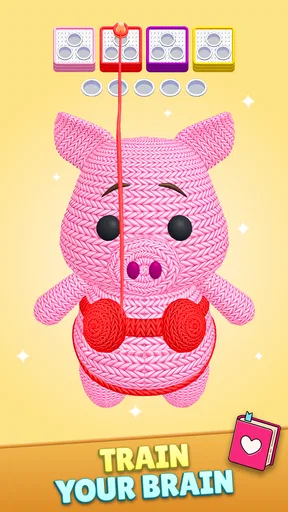
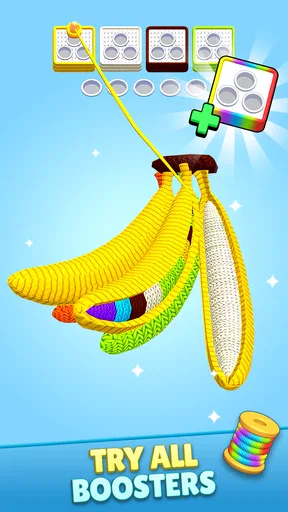
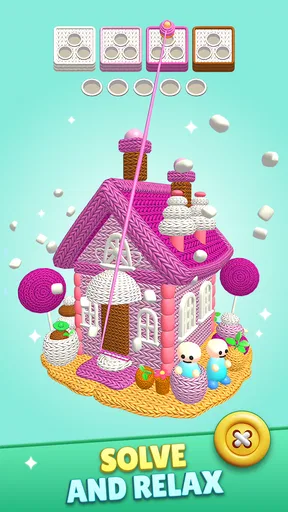
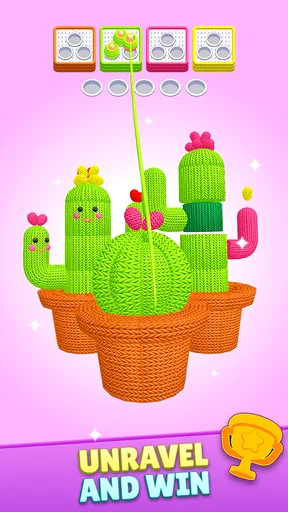
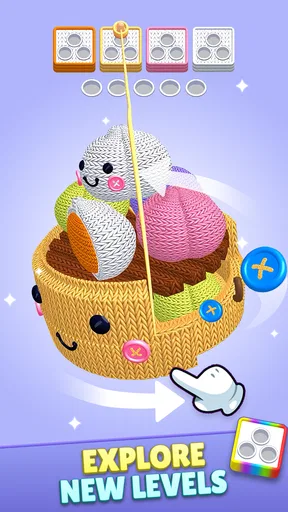
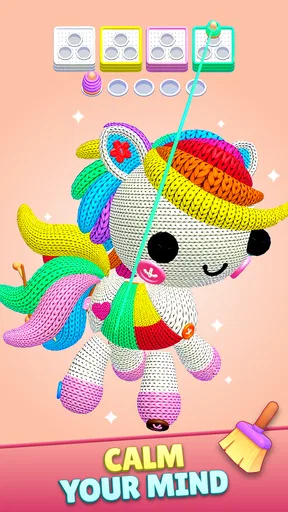
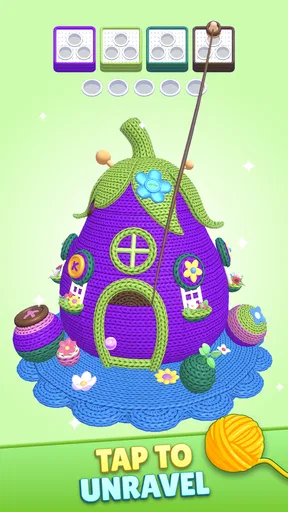
Our Review of Unravel Master: Tangle Puzzle
 Analysis by Appyee
I like casual puzzle games that give me something to think about without demanding a long session, and this one fits that mood. In Unravel Master: Tangle Puzzle, the challenge is to move colorful strands until their crossings are sorted out. The idea is immediately readable, but the order of your moves matters, so a board that first looks simple can turn into a satisfying little logic problem.
How the puzzles feel in practice
So, you’ve just downloaded Unravel Master: Tangle Puzzle and you’re wondering what to expect. Right off the bat, the user interface is simple and intuitive. You don’t get bombarded with a ton of menus or complicated settings. It’s just you and the tangled mess. The game starts with a quick tutorial that’s more of a hands-on experience, which I really appreciated. It felt like learning by doing rather than reading a manual.
Untangling is about choosing the right order
The core of the game lies in its deceptively simple mechanics. You’ve got these colorful strings, all knotted up, and your job is to untangle them by dragging them around. Sounds easy, right? But as you progress, the puzzles become increasingly complex. Some levels had me scratching my head for longer than I’d like to admit!
The useful habit I developed was to pause before dragging and trace each strand with my eyes. I look for which thread seems to be trapped beneath other crossings, then consider whether moving one endpoint could clear more than one conflict. That small bit of planning often saves me from making several moves that merely rearrange the mess. It also makes the game feel less like random trial and error and more like working out a route.
When I get stuck, I find it helps to change perspective rather than keep repeating the same move. I check the whole arrangement again, follow one color at a time, and ask which crossing is preventing the others from being resolved. This is a simple strategy, but it makes a real difference on denser puzzles. If you prefer to experiment freely, you can still try moves and learn from the result; the important trade-off is that careful observation feels more rewarding than rushing.
A calm challenge, with a few limits
One thing I noticed is how the game manages to strike a balance between being a peaceful experience and a real brain teaser. It’s perfect for when you’re looking to unwind without completely shutting off your brain. There’s no ticking clock or high-stakes pressure, just you and the puzzle.
That relaxed pace makes it a good fit for a short break: I can open it while waiting for a drink, play through a puzzle or two, and stop when I need to. It also suits a quiet moment at home when I want a small mental reset rather than a story-heavy game that asks me to remember characters, objectives, or a long chain of events. The thread layout gives each level a clear visual problem, so returning after a pause is straightforward.
Still, the same focus is also the main limitation. If you want varied modes, a narrative, competitive play, or a stream of different activities, this is a narrow proposition: the pleasure comes from solving one kind of spatial puzzle repeatedly. Players who get restless when a game revisits its central mechanic may find the format familiar sooner than puzzle fans do. I would choose a broader puzzle collection when variety matters more than the tactile satisfaction of moving strands.
It is also worth approaching it as a visual reasoning game, not as a demanding test of speed. I would not recommend it to someone looking for frantic action or a punishing challenge under time pressure. Its appeal is the measured process of looking, moving, and checking whether a tangle has opened up.
Color and sound support concentration
Visually, the game is pretty minimalistic, but that’s part of its charm. The bright, vibrant colors of the threads stand out against the neutral backgrounds, making it easy to focus on the task at hand. Plus, the smooth animations make dragging and untangling the threads feel satisfying.
For me, the clear contrast is more than decoration: it helps when several strands overlap and I need to follow one route across the board. A practical tip is to trace a single color from end to end before deciding what to move, rather than trying to interpret every crossing at once. That keeps the puzzle manageable and reduces the chance of confusing one thread with another. The uncluttered presentation serves the mechanics well, although anyone who wants elaborate environments or a strong visual theme may find it spare.
As for the sound, it’s a pleasant surprise. The background music is soothing, almost meditative, which complements the gameplay perfectly. It’s the kind of soundtrack that enhances the experience without becoming repetitive or annoying.
That calm soundscape works best when I want a low-key activity, but it is not essential to understanding the puzzle. If I am playing somewhere that calls for silence, the visual layout still carries the experience. I would treat the music as atmosphere rather than a reason to choose the game; the central draw remains the thread arrangement and the moment a difficult crossing finally makes sense.
Who is likely to enjoy it
If you’re anything like me, you’ll find yourself getting hooked on the sheer satisfaction of solving each puzzle. There’s something incredibly rewarding about seeing those threads fall into place. And let’s not forget the sense of achievement that comes with cracking a particularly tricky level.
I think it is especially well suited to people who enjoy spatial puzzles but do not want a countdown pushing them through each decision. It can also work for someone who usually plays in brief bursts: the basic task is easy to understand, and there is no complicated setup to remember each time. For a shared moment, I can imagine handing the phone to a friend and comparing ideas about which strand to move first; the visible tangle makes the problem easy to discuss without explaining a backstory.
It is less suitable if you need a game to provide deep strategic systems, character progression, or a broad mix of puzzle types. Nor would I pick it for a player who dislikes dragging objects around a screen or who finds untangling-style puzzles repetitive. That is not a flaw in the concept so much as a matter of taste: the narrow focus is exactly what makes it easy to approach, but it also defines what the game does not try to be.
Its place among casual puzzle games
Compared with match-style casual games, this asks me to inspect relationships between objects rather than react to a changing board. Compared with word puzzles, it relies on visual paths instead of vocabulary. That makes it a useful alternative when I want a puzzle that feels hands-on and spatial, but it will not replace those other formats if I want variety or a different kind of mental exercise.
There is a small but useful distinction between moving quickly and solving efficiently. On a tangled level, I get more from identifying a strand that blocks several others than from nudging whichever line looks easiest. This way of thinking gives the simple controls more depth than they first suggest. It also makes the game a better fit for a short thoughtful pause than for a distraction that requires almost no attention.
The game is free to download, while optional in-app purchases range from $0.99 to $99.99 per item. I would keep that distinction in mind if I am installing it for a younger player or managing spending on a device. Its content rating is Teen, so I would check that suitability for the person who will play rather than assuming every casual puzzle game is intended for every age.
What the current version tells returning players
Supersonic Studios LTD developed the game, which sits among casual games. It was released on April 12, 2025, and version 1.9.9 is the current version. Those details establish where the app stands now, but they do not by themselves tell me which mechanics or content changed between releases, so I would not treat the version number as evidence of a particular new feature.
If you already play, the most useful way to judge a new version is by how the game feels in your own hands: whether the strands remain easy to distinguish, dragging still feels responsive, and the puzzles continue to hold your attention. I would also avoid assuming that a version change means the core approach has been redesigned. For newcomers, the current build is simply the version to try; for returning players, their own experience is the best guide to whether anything feels different.
The game has a 4.8 average from around 38,000 ratings, and it has passed 5 million installs. That suggests many people have been willing to try this particular kind of puzzle, but popularity cannot tell me whether its repeated untangling mechanic suits my taste. I would use those figures as context, then decide based on whether I enjoy patient visual problem-solving.
On Android, the stated minimum operating system is Android 7.0. Before downloading, I would check the device’s software version and make sure there is enough room for another game. Those are simple checks, but they can save a frustrating install attempt, especially on an older phone.
What I would watch for over time
The developers seem to be pretty active, so I wouldn’t be surprised if more levels are added in the future. That is an expectation, not a promise: I would not download it on the assumption that a particular update or feature is on the way. The practical thing to watch is whether the game continues to give you puzzles that feel fresh enough to make its focused format worthwhile.
For a new player, I would give the game a fair try by treating each board as a small sequence problem, not a race. For someone already playing, I would pay attention to whether the challenge remains satisfying or starts to feel like repetition. That is the key question for this title: its simple premise can be absorbing when a layout makes me think, but the same premise may lose its pull if I no longer enjoy working through tangles.
Final Thoughts
In a world where apps can sometimes overwhelm you with options and noise, Unravel Master: Tangle Puzzle is a breath of fresh air. It’s a game that’s easy to pick up yet challenging enough to keep you engaged. Whether you’re looking to kill some time or to genuinely test your problem-solving skills, this app delivers.
So, if you’re ready to unwind and untangle, give Unravel Master: Tangle Puzzle a try. Just a heads-up—you might find yourself losing track of time as you dive deeper into the tangled world of threads!
Verdict
Strengths of Unravel Master: Tangle Puzzle
- Engaging puzzles keep players hooked.
- Simple controls make it easy to play.
- Colorful graphics enhance the experience.
- Regular updates with new levels.
- No intrusive ads during gameplay.
Limitations of Unravel Master: Tangle Puzzle
- Levels can become repetitive over time.
- Some puzzles feel too easy for experts.
- In-app purchases can be pricey.
- Occasional glitches in older devices.
- Requires internet for daily rewards.
Other Releases by Supersonic Studios LTD
View All


Similar Picks in This Category
View All
My Talking Angela
Outfit7 Limited4.2

My Talking Tom
Outfit7 Limited4.3

Pou
Zakeh4.2

My Talking Tom 2: Pet Game
Outfit7 Limited4.3

Candy Crush Saga
King4.6

Bridge Race
Supersonic Studios LTD4.1
Frequently Asked Questions
What is the main objective of Unravel Master: Tangle Puzzle?
Unravel Master: Tangle Puzzle challenges players to untangle complex knots and puzzles. Each level presents a new tangled design that requires strategic thinking and precision to solve. The game aims to enhance problem-solving skills and offers a relaxing yet stimulating experience for puzzle enthusiasts.
Is Unravel Master: Tangle Puzzle suitable for all ages?
Yes, the game is designed to be family-friendly and suitable for players of all ages. The intuitive interface and varying difficulty levels make it accessible to both younger players and adults looking for a mental challenge. It’s a great way to improve cognitive skills while having fun.
Are there in-app purchases in Unravel Master: Tangle Puzzle?
While Unravel Master: Tangle Puzzle is free to download and play, it does offer in-app purchases. These typically include hints or additional levels. Purchases are optional and designed to enhance the gaming experience. Players can enjoy the base game without spending any money.
Can I play Unravel Master: Tangle Puzzle offline?
Yes, Unravel Master: Tangle Puzzle can be played offline, making it a perfect choice for users who want to enjoy the game without an internet connection. This feature ensures that players can engage with the puzzles anytime and anywhere, regardless of connectivity.
How does the difficulty progress in Unravel Master: Tangle Puzzle?
The game starts with simpler puzzles to help new players get acquainted with the mechanics. As you advance, the puzzles become more intricate and challenging, requiring greater strategic thought and patience. This gradual increase keeps the gameplay engaging and rewarding.
Play our best games!


